
Core exercises for triathletes should do one job: help you hold good position when you are tired. That means a stable body line in the water, a steady trunk in the aero position and a tall posture in the last five kilometres of the run. Endless crunches do not do that. These six exercises do, and they are what we use at our Samford gym.
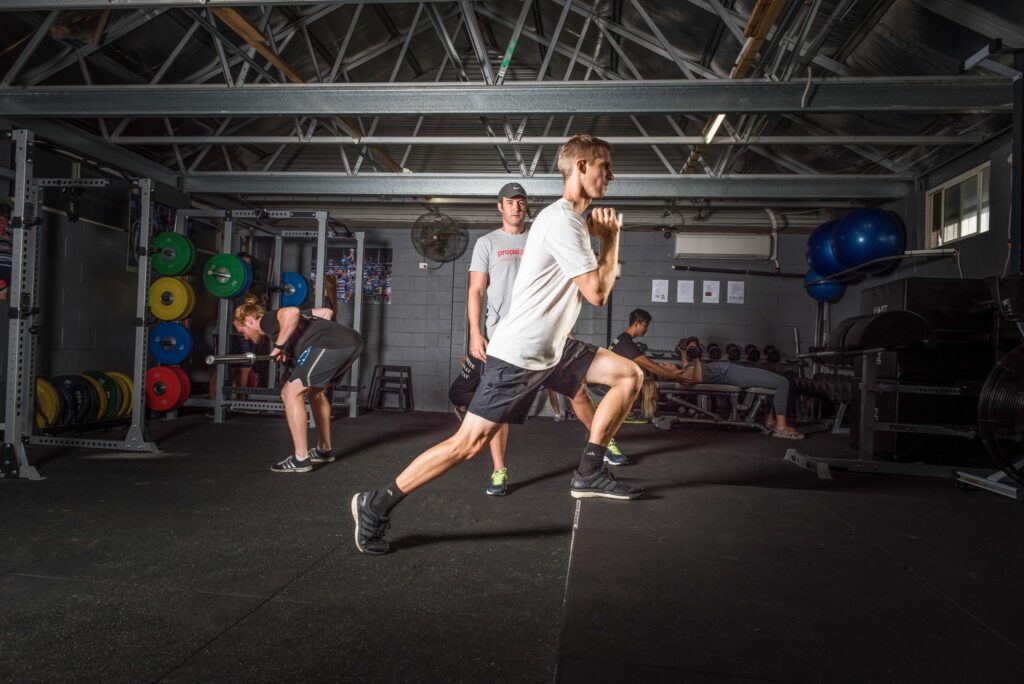
What core exercises for triathletes should train
- Anti-extension: stopping your lower back arching in the water and on the run.
- Anti-rotation: keeping the trunk still while the arms and legs work.
- Hip stability: keeping the pelvis level on each running stride.
The six exercises
| Exercise | Sets and reps | Carries over to |
|---|---|---|
| Dead bug | 3 x 8 each side | Body line in the swim |
| Front plank with reach | 3 x 6 each side | Aero position stability |
| Pallof press | 3 x 10 each side | Resisting rotation on the bike and run |
| Side plank | 3 x 20 to 30 seconds each side | Level pelvis when running |
| Single-leg glute bridge | 3 x 10 each side | Hip extension in the run |
| Suitcase carry | 3 x 30 metres each side | Posture late in a race |
Where core work fits
Tack 10 minutes onto the end of your two strength sessions. Core work does not need its own day. If you are not yet lifting, start there first: the core is only one part of the program, and the full plan is in this guide to strength training for triathletes over 40.
Core exercises for triathletes over 40
After 40, slow and controlled beats fast and many. Hold positions, breathe, and stop a set when your form changes. Our strength training over 40 guide explains how to progress load without flaring up the lower back.
Common mistakes
- Training only the abdominals and forgetting the glutes and side of the trunk.
- Doing core work before a key run or swim, when you want to be fresh.
- Holding your breath through every rep.
Common questions
How often should triathletes do core work?
Two or three times a week is enough, ideally at the end of strength sessions. Short and consistent beats long and occasional.
Do sit-ups help triathletes?
They are not harmful, but they train the wrong job. Triathletes need the trunk to resist movement, which is what the exercises above train.
Can I do these at home?
Yes. Every exercise here can be done at home with a band and a dumbbell or a heavy shopping bag for the carry.
When will I notice a difference?
Most athletes notice they hold position better late in long sessions after six to eight weeks.
When to get it checked
Lower back pain that comes on during long rides or late in runs is common in triathletes and often responds to the right strength work. If it lingers, see an exercise physiologist for an assessment and a tailored program.