
Strength training for men over 50 is the single best thing you can do to stay strong, protect your joints and keep doing the things you enjoy. After about 40, men lose roughly 1 percent of muscle mass a year if they do not load their muscles regularly. The good news: that loss is not inevitable. A well-structured strength program, done two or three times a week, can reverse years of decline. Here is how we set it up at our Samford gym, written by an accredited exercise physiologist.
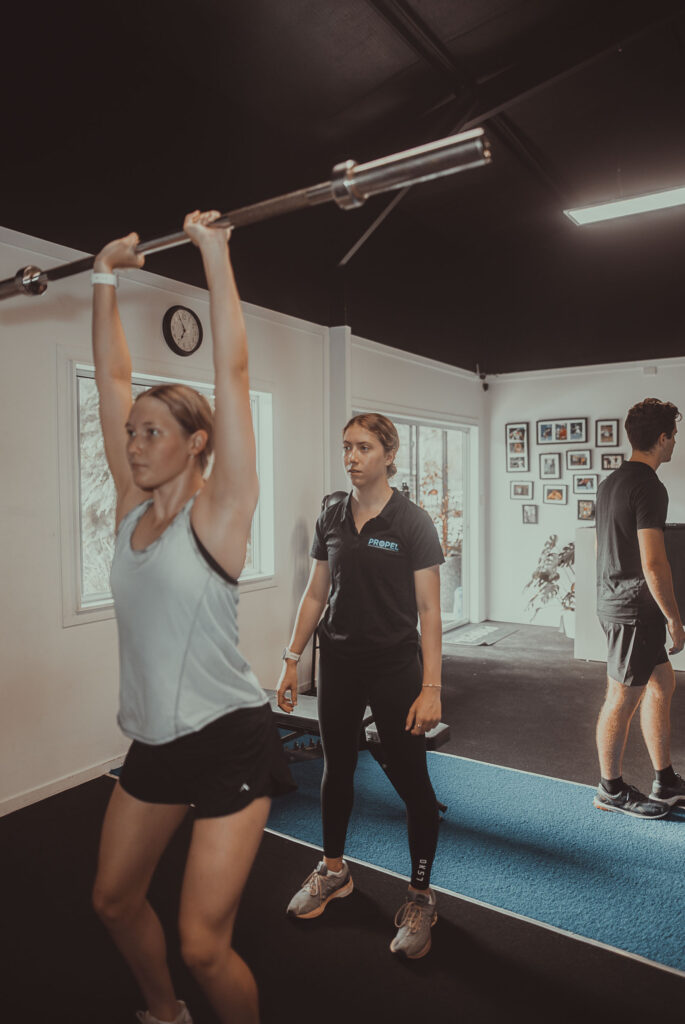
Why strength training for men over 50 matters
Between 50 and 70, an inactive man can lose 15 percent or more of his total muscle mass. That shows up as weaker legs getting out of a chair, a sore lower back after gardening, and a higher risk of falls. Strength training loads the muscles and the bones at the same time. It improves bone density, joint stability and the everyday confidence that comes from being able to lift, carry and move without thinking about it.
How to start
If you have not lifted weights before, or not for a long time, start with two sessions a week. Keep the exercises simple and focus on learning the movements well before adding weight. A session should take 40 to 50 minutes, including a warm-up.
- Warm up for five minutes. A brisk walk, a bike, or a few bodyweight squats and arm circles. Get the blood moving and the joints loose.
- Pick one exercise per movement pattern (see the table below).
- Do two to three sets of 8 to 12 reps. The last two reps should feel hard but not impossible.
- Rest 60 to 90 seconds between sets. Take more if you need it.
- Cool down with a few minutes of easy walking and a stretch for anything that feels tight.
A simple full-body program
This is a starting point. Adjust it as you get stronger.
| Movement | Exercise | Sets x Reps |
|---|---|---|
| Squat | Goblet squat or leg press | 3 x 10 |
| Hinge | Romanian deadlift or hip thrust | 3 x 10 |
| Push | Dumbbell bench press or push-up | 3 x 10 |
| Pull | Seated row or lat pulldown | 3 x 10 |
| Single leg | Step-up or split squat | 2 x 10 each side |
| Carry | Farmer’s walk | 2 x 30 metres |
Do this twice a week with at least one rest day between sessions. After four to six weeks of consistent training, you can add a third session or increase the weight.
Common mistakes to avoid
- Going too heavy too soon. Your muscles adapt faster than your tendons. Build up gradually over weeks, not days.
- Skipping legs. Lower body strength keeps you balanced, protects your knees and makes everyday tasks easier.
- Ignoring soreness that does not fade. Muscle soreness for a day or two after a session is normal. Pain in one spot, especially a joint, is not. Our guide to feeling sore after the gym explains the difference.
- Training the same way for months. Change the exercises, the rep range or the load every four to six weeks to keep progressing.
Balance and injury prevention
Falls become a real risk after 50, especially for men who have always felt steady and do not think it applies to them. Adding single-leg work and carries to every session trains the balance system without needing a separate balance class. If you want a dedicated routine, our guide to balance exercises for older adults has a full program. Our strength training for women over 40 guide shares many of the same principles and is worth reading if you train with a partner.
Nutrition basics
You do not need a complicated diet. Eat enough protein across the day, roughly 1.2 to 1.6 grams per kilogram of body weight, spread over three or four meals. That is about a palm-sized serve of meat, fish, eggs or dairy at each meal. Some people add a scoop of grass fed whey protein isolate Australia to a smoothie on training days when a meal is not convenient. Some people add creatine monohydrate as a daily supplement.
When to get it checked
If you have not exercised in years, have a heart condition, joint replacement, or persistent pain, get a professional assessment before you start. An exercise physiologist can screen for risks, write a program around any limitations, and progress you safely. At our Samford gym we see men in their 50s, 60s and 70s get stronger every month. The best time to start was 10 years ago. The second best time is this week.