
Hip mobility drills take five to ten minutes and make squatting, running, getting in and out of the car and tying your shoelaces noticeably easier. Stiff hips are one of the most common things we see at our Samford gym, especially in people who sit for work. These are the seven drills we use most, from an accredited exercise physiologist.
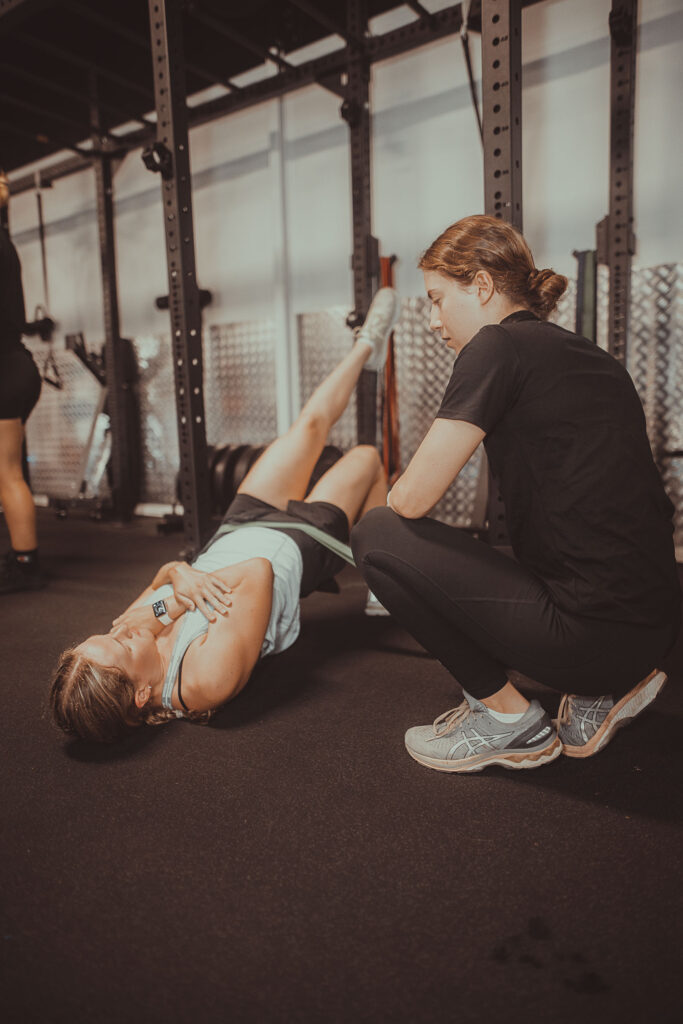
Why hips get stiff
The hip is a ball-and-socket joint built to move in every direction, but most of us only use a small part of that range. Hours in a chair keep the front of the hip shortened, and walking or running only moves it forwards and back. Joints and the muscles around them adapt to what you ask of them, so the range you do not use gradually becomes range you do not have.
7 hip mobility drills
1. 90/90 switches
Sit on the floor with both knees bent to 90 degrees, one leg in front and one to the side. Keeping your chest tall, rotate both knees to the other side. Do 8 slow switches.
2. Hip flexor lunge stretch
Kneel on one knee with the other foot in front. Tuck your tailbone under and shift forward until you feel a stretch at the front of the back hip. Hold 30 seconds each side.
3. Deep squat hold
Hold a bench or door frame and sit down into a deep squat, heels on the floor if you can. Gently push your knees out with your elbows. Hold 30 to 60 seconds.
4. Cossack shift
Take a wide stance and shift your weight to one side, bending that knee while the other leg stays straight with toes up. Move side to side for 6 each way.
5. Hip circles on all fours
On hands and knees, lift one knee slightly and draw big slow circles with it. 5 each direction, each leg.
6. Glute bridge with reach
Lie on your back and lift your hips into a bridge, squeezing your glutes so the front of the hips opens fully. Hold 3 seconds at the top. Do 10.
7. Standing leg swings
Hold a wall and swing one leg forward and back, then side to side, 10 each way. A good one to finish with or to use before a run.
How often to do hip mobility drills
Daily is best, and short is fine. Run through the seven drills once in the morning or before training. If you sit all day, add a hip flexor stretch every hour or two. Most people feel a difference within two weeks.
Mobility is better with strength
Range you cannot control is not much use. Once your hips move better, strengthen the new range with squats, split squats and bridges. Our guide to strength training for women over 40 has a simple workout to pair with these drills, and runners should start with our running plan for beginners.
When to get your hips assessed
Stiffness that eases as you move is normal. Pain in the groin, clicking with pain, or stiffness that is getting worse should be checked. An exercise physiologist can assess your hips and write a program that suits you.