
Mobility for BJJ is not about doing the splits. It is about having enough range in your hips, upper back and neck to play guard, frame and bridge without forcing a joint to the end of its range every round. These are the drills we give grapplers at our Samford gym, and they take ten minutes.
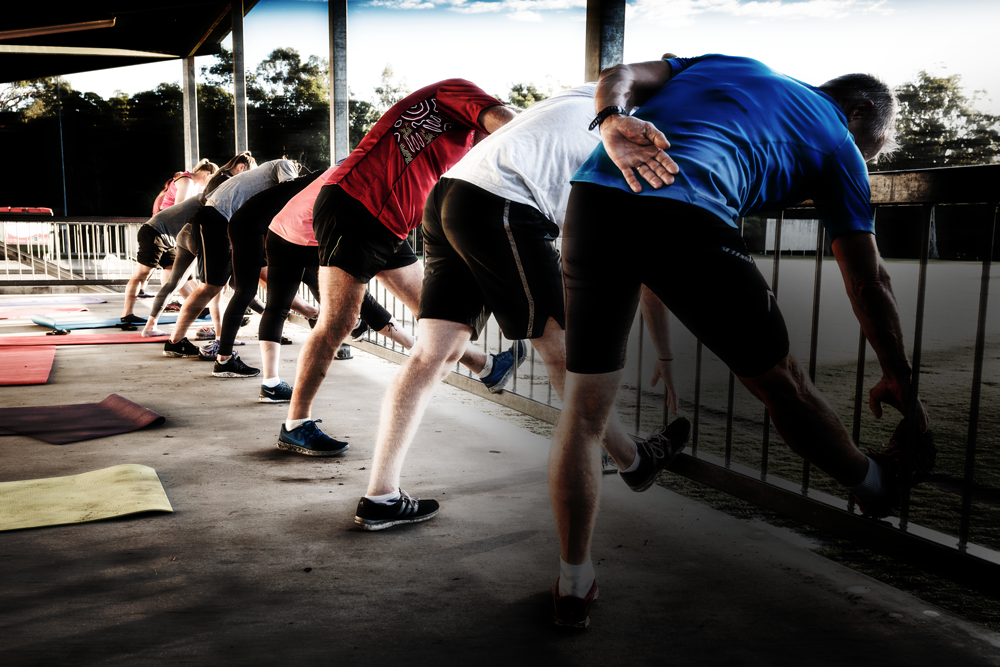
Why mobility for BJJ matters more after 35
Jiu jitsu puts joints in positions most other training never touches: a knee twisting in a leg entanglement, a shoulder at end range in a kimura, a neck flexed under a stack. When range is short, the joint takes the strain instead of the muscle. A lot of grapplers over 35 ask us whether the sport itself is the problem. We cover that question honestly in this coach’s answer to is BJJ bad for your joints, but most of the time the issue is preparation, not the sport.
The ten-minute routine
- 90/90 hip switches. 10 slow switches. Opens the hips for guard retention.
- Cossack squat. 6 each side. Builds range for side-to-side movement and base.
- Thoracic rotation on all fours. 8 each side. Helps framing and turning in.
- Bridge and reach. 8 each side. Rehearses the shrimp and upa with control.
- Neck circles, then gentle isometrics. 5 each direction, then 10 seconds each way against your hand.
- Wrist and finger openers. 30 seconds. Gi grips are hard on small joints.
Hip mobility for guard players
If you play guard, internal and external hip rotation are your currency. The 90/90 and pigeon positions are the two we use most. Our hip mobility drills go deeper if your hips are the main restriction.
Shoulders and upper back
A stiff upper back pushes the load into the shoulder and neck. Thoracic rotation and a slow wall slide before class give the shoulder somewhere to move from. Do not stretch a shoulder into a position that already feels unstable.
Mobility is not a substitute for strength
Range you cannot control is a liability. Pair this routine with two strength sessions a week so the range you build is range you own. Our strength training over 40 guide shows how to fit that around training.
Common questions
Should I stretch before or after class?
Before class, use the active drills above to prepare the joints. After class, gentle longer holds for the hips and upper back are fine if they feel good. Neither replaces strength work.
How long until my guard feels easier?
Most people notice a difference in hip comfort within three to four weeks of doing the routine before every class. Range keeps improving for months if you stay consistent.
Is yoga good for BJJ?
It can be. A weekly yoga class is a good way to get regular mobility work done, as long as you do not push into positions that already feel unstable.
When to get it checked
If one hip or shoulder is far stiffer than the other, or a drill reproduces a sharp pain, stop pushing it. An exercise physiologist can work out whether the limit is the joint, the muscle or an old injury, and adjust the plan.