
Recovery between training sessions decides how much you get out of the sessions themselves. At our Samford gym, when a client tells us they feel flat, the answer is rarely a new program. It is almost always one of five basics between the sessions.
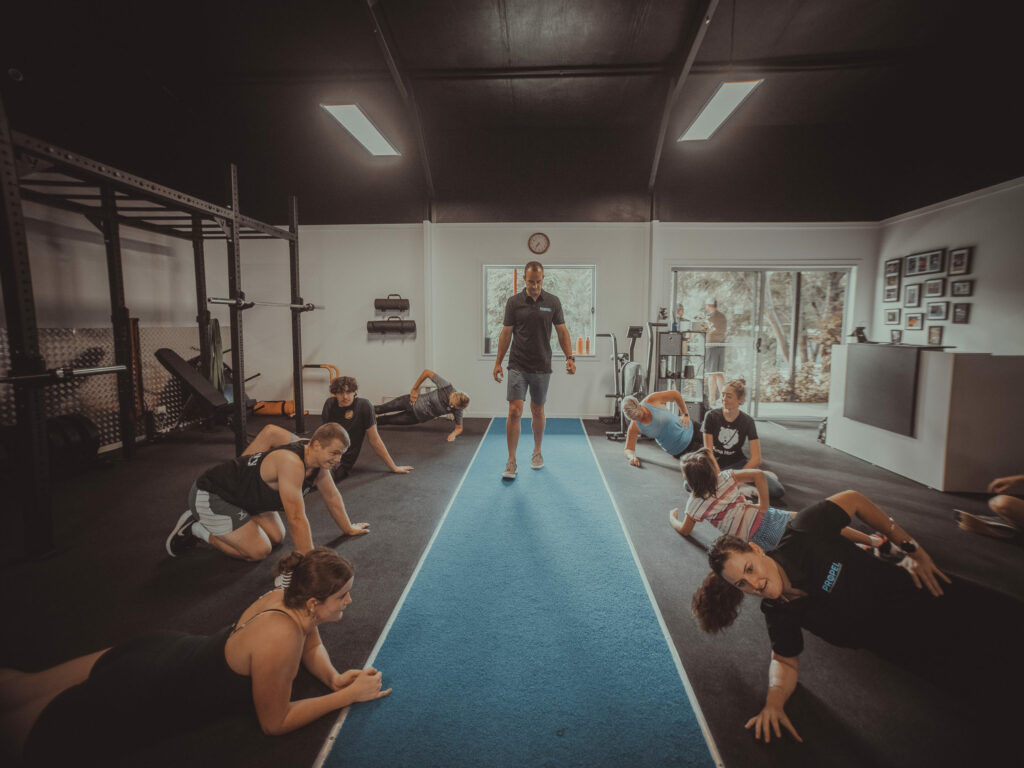
The five basics of recovery between training sessions
| Basic | Target | Quick check |
|---|---|---|
| Sleep | 7 to 9 hours | Do you wake without an alarm on weekends? |
| Food | Protein at every meal, enough carbohydrate | Are you hungry all evening? |
| Spacing | 48 hours between hard sessions for the same area | Back-to-back leg days? |
| Easy days | Genuinely easy | Can you chat the whole time? |
| Life load | Adjust training in busy weeks | Work, travel, family stress? |
Sleep first
Sleep is where most of the adaptation from training happens. If you only change one thing, go to bed 30 minutes earlier for two weeks and see how your sessions feel.
Food between sessions
Eat a meal with protein and carbohydrate within a couple of hours of training, and spread protein across the day. Under-eating is one of the most common reasons active adults feel flat. Our pre workout snack guide has simple ideas.
Spacing your week
Hard sessions for the same muscle groups need about 48 hours between them. A simple week for someone training four times:
- Monday: lower body strength
- Tuesday: easy run, ride or swim
- Thursday: upper body strength plus intervals
- Saturday: longer easy session
Wednesday, Friday and Sunday are rest days or walks.
Hands-on extras
Foam rolling, stretching and self-massage are extras, not foundations. They are worth doing because they get you paying attention to your body. Some of our clients use an oil for self-massage on rest days, and if you are comparing oils, here is a guide to the best castor oil in Australia. Our foam rolling guide covers the roller side.
Signs you need more recovery between training sessions
- Sessions that usually feel fine suddenly feel hard
- Soreness lasting more than three days
- Poor sleep despite being tired
- Losing interest in training
Two or more for a week means back off for a few days. Our guide to soreness after training explains how to read soreness.
Recovery between training sessions after 40
Many of our clients over 40 notice that soreness lasts a day longer than it used to. That does not mean training less overall. It usually means fewer hard sessions, more genuinely easy ones, and a lighter week every three or four weeks. Strength training twice a week stays in the plan. Our strength training over 40 guide explains how to fit it in.
Keep a simple diary of sleep, energy and soreness out of ten. Patterns show up within a month.
A simple weekly check
Every Sunday, score the week out of ten for sleep, food, energy and soreness. Anything under six two weeks running is the area to work on next. It takes two minutes and tells you more than any gadget. Bring the scores to your next session so your coach can adjust the plan with you.
Common questions
How long should I rest between workouts?
About 48 hours between hard sessions for the same area. Easy sessions can be closer together.
Is it OK to train sore?
Mild soreness is fine for easy work. If it changes how you move, rest that area.
Does stretching speed up recovery?
It is a good habit, but sleep, food and session spacing matter far more.
Should older adults rest more?
Often yes. Many people over 50 do well with an extra rest day and a lighter week every three or four.
When to get it checked
If you have fixed the basics and still feel flat for weeks, see an exercise physiologist, and see your GP if fatigue is affecting the rest of your life.