
Sore legs after a workout are almost always delayed onset muscle soreness, or DOMS. It means you asked your muscles to do more than they are used to, and they are recovering and adapting. Most of the time it is a sign that training is working, not a sign that something is wrong. Here is how to tell the difference, what actually helps, and when to get it looked at.
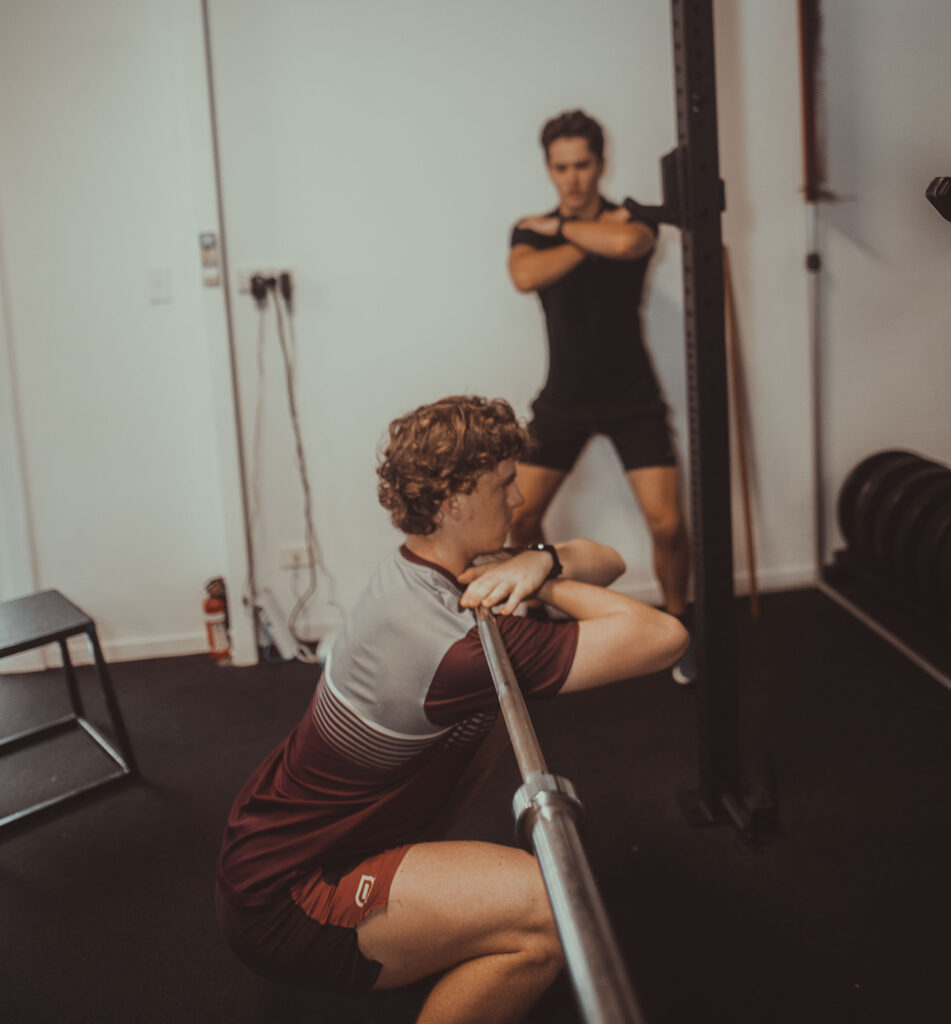
Why your legs are sore after training
DOMS peaks 24 to 72 hours after exercise and fades over a few days. It is worst after exercises that load the muscles while they lengthen: lunges, step-downs, running downhill, or the lowering phase of a squat. New exercises, heavier weights and longer runs all trigger it because the muscle is not yet adapted to that load. The soreness itself is not damage. It is part of the process as the muscle rebuilds slightly stronger than before.
What to do about sore legs
Most remedies speed up how quickly you feel better rather than how quickly the muscle adapts. The adaptation happens at its own pace. That said, these help you move and train while it happens.
| What to do | Why it helps |
|---|---|
| Light movement (walk, easy cycle, swim) | Gets blood flowing through sore tissue without adding load. Often the single best thing you can do. |
| Foam rolling | Reduces the sensation of stiffness and tenderness. Roll slowly over the sore area for 60 to 90 seconds per muscle group. |
| Warm bath or warm shower | Warmth relaxes the muscle and increases blood flow. Keep it comfortable, not scalding. |
| Sleep | Most muscle recovery happens overnight. Aim for seven to nine hours when training hard. |
| Protein with meals | Your muscles need amino acids to recover. Include a palm-sized serve of protein at each meal. |
| Gentle stretching | Does not speed recovery, but can ease the tight feeling. Stretch to comfort, not through pain. |
Our full guide to foam rolling sore muscles walks through the technique for quads, hamstrings and calves.
A simple sore legs recovery routine
Use this the day after a heavy leg session or a long run.
- 10 minute easy walk to warm up.
- Foam roll quads, hamstrings, calves and glutes: 60 to 90 seconds each.
- Gentle hip circles, standing: 10 each direction.
- Bodyweight squat to a comfortable depth: 2 sets of 10, slow and controlled.
- Calf raises off a step: 2 sets of 12.
- 5 minute walk to finish.
The goal is movement, not effort. If something hurts sharply, skip it. You should feel looser afterwards, not more tired.
Sore legs or something worse?
DOMS is symmetrical and general: both quads sore, or both calves tight. Watch for these signs that it might be something else.
- Pain in one specific spot, especially on a bone. That needs a check for a stress reaction.
- Sharp pain that makes you limp. DOMS is stiff and achy, not sharp.
- Swelling, heat or redness in one leg. See a doctor the same day.
- Soreness that does not improve after four days. Normal DOMS resolves within three to five days.
If you are unsure, an exercise physiologist can test whether the soreness is muscular or structural and adjust your training so it does not keep happening.
How to get sore legs less often
You will never eliminate DOMS completely, and you do not need to. But you can reduce how often it disrupts your week.
- Progress gradually. Add no more than 10 percent to your running volume or lifting load each week.
- Warm up before training. Five to ten minutes of light movement and dynamic stretches prepare the muscles for load. Our hip mobility drills are a good starting point for leg day.
- Do not skip the eccentric work. Muscles adapt fastest to exactly the movement that made them sore. The second time is always easier.
- Eat enough protein. Spread it across three to four meals through the day, a palm-sized serve each time.
- Sleep consistently. Broken or short sleep slows recovery and makes soreness feel worse.
When to train on sore legs
Light to moderate soreness is not a reason to skip training. An easy session, or a session that works different muscles, is usually fine. Heavy soreness that limits your range of motion is a signal to take a lighter day or train something else. If you are consistently too sore to train, you are progressing too fast. Our guide to feeling sore after the gym covers how to plan your week so soreness does not pile up.