
A warm up for older athletes needs to do more than raise your heart rate. After 40, joints and tendons take longer to get ready for hard work, so a few minutes of easy jogging is not enough. This is the ten-minute routine we use at our Samford gym before training and competition.
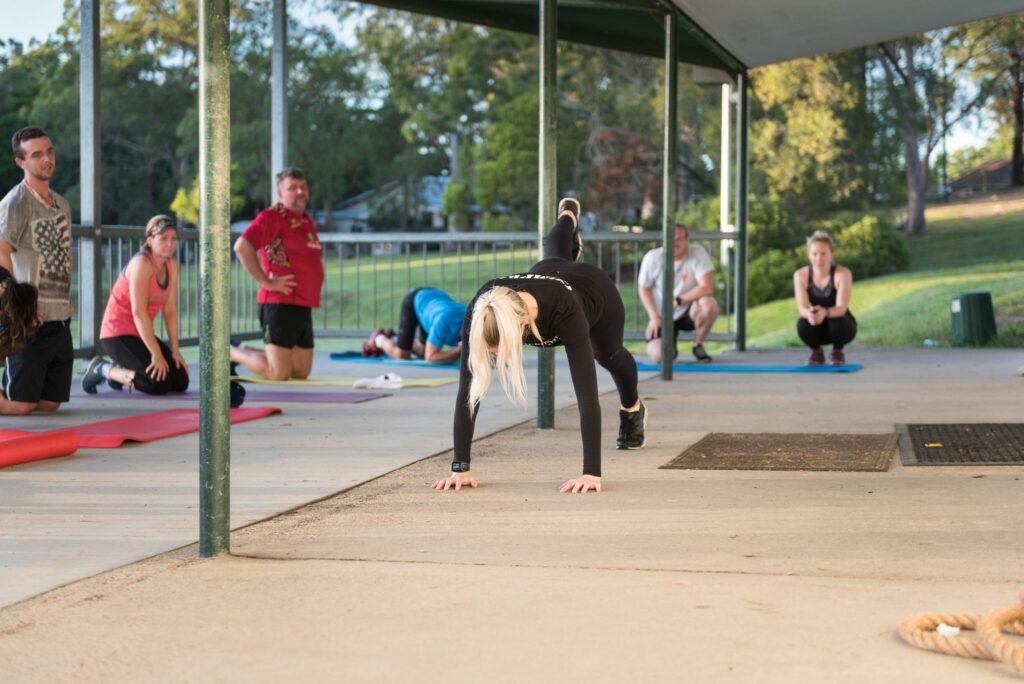
Why the warm up changes with age
Tendons and connective tissue become stiffer with age and take longer to respond to load. A structured warm up moves joints through their range, then builds speed and load gradually, so the first hard effort is not the first time your body has moved properly that day.
The 10-minute warm up for older athletes
| Minutes | What to do |
|---|---|
| 0 to 3 | Easy movement in your sport: jog, spin, swim or light drilling |
| 3 to 5 | Leg swings, hip circles, thoracic rotations, arm circles |
| 5 to 7 | Bodyweight squats, lunges with a reach, calf raises |
| 7 to 9 | Build-ups: three short efforts at 60, 75 and 90 percent |
| 9 to 10 | One or two sport-specific drills at full speed |
Warm up for older athletes by sport
- Runners: add ankle and calf work, plus three strides before any fast running.
- Cyclists: spend longer at easy cadence before any hard efforts, and add hip openers off the bike.
- Swimmers: shoulder circles and band pull-aparts on deck before you get in.
- Grapplers and court sports: more hip, neck and lateral movement before live work.
Before competition
Add five minutes and finish closer to the start. Older athletes lose the benefit of a warm up faster if they then stand around for 20 minutes. Our hip mobility drills are a good extra if your hips are stiff on race morning.
Looking after joints between sessions
The warm up is one part of joint care. Two strength sessions a week matter more, and so does steady weekly load. Some athletes also use a daily joint formula. Propel Health Australia explains how to read the label in their guide to joint supplements for athletes. Our running strength program shows how strength fits around running.
Common questions
Is static stretching a good warm up?
Long static stretches are better after training. Before training, keep stretches short and active, then build speed.
How long should older athletes warm up?
Ten minutes before training, around fifteen before a race or hard session.
Do I need to warm up for easy sessions?
A shorter version helps. Even three to four minutes of easy movement and a few drills makes the first part of the session more comfortable.
When to get it checked
If one joint stays stiff long after you warm up, or a warm up drill brings on sharp pain, stop and get it assessed. An exercise physiologist can find the cause and adjust your routine.